
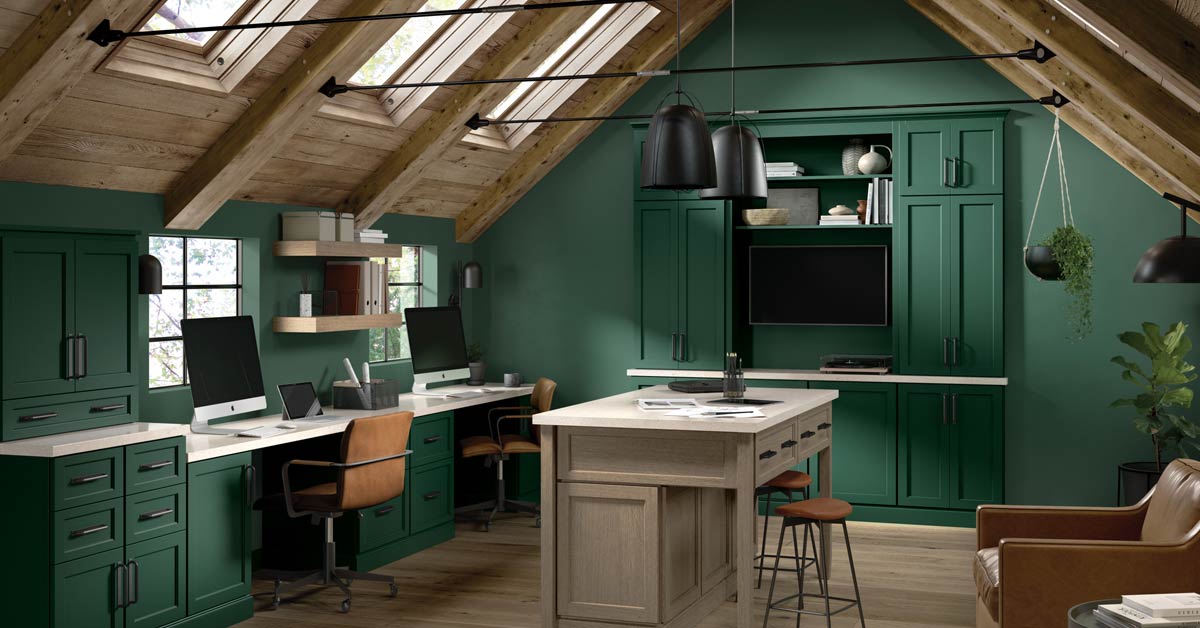
26 Feb Converting an Attic or Crawl Space into a Livable Area

Converting an attic or crawlspace into a livable area is a complex undertaking for most homeowners in the Quad Cities. There’s a lot of planning and permitting, assessing the space for safe access, and infrastructure concerns like HVAC, dehumidifier, electricity, and insulation. But the investment is often less than adding an addition to your home, and it’s space you already have.
Here we share with you what’s involved in converting an attic or crawlspace into an extra room your family can use, and give you the pros and cons for both. If you’re considering converting an attic or crawlspace, read on.
Converting an Attic or Crawlspace
When you invest in renovations to your Quad Cities home, you want some assurance that the investment will bring a return in terms of resale value. And, at the very least, you want an investment that will enhance your living space in a positive and useful way, and not add maintenance tasks or pose a safety risk to your family. Below, we offer the key considerations you need to think about when converting an attic or crawlspace into a livable space.
Converting Your Attic
An attic is defined as the space above a structure that’s just below the roof. Typically insulated and used for storage, it’s located directly above the top floor of your home. Because most attics already have the basic framework and insulation, it’s fairly easy to convert them into additional space for your family to use and enjoy.
Converting your attic into a home office, hobby room, guest room, kids’ playroom, or even a master suite is a great idea. Although there is much to be considered in doing so. Key considerations are ceiling height, insulation, safe access, and making sure you adhere to building codes. Here are the pros and cons of converting your attic into a livable space:
Pros
- Adds space without adding to your existing structural footprint
- Excellent return on investment and resale value
- Doesn’t reduce your yard space
- Significantly improves your energy efficiency by sealing the attic for comfort
Cons
- Costly investment
- Structural limitations due to sloping ceilings and awkward spaces
- Loss of storage space
- May pose temperature control issues if not properly insulated, sealed, and vented for HVAC
- Construction disruption: the project may take weeks to months and disrupt your lifestyle, cause dust and debris, and there will be traffic in and out of your home.
- There must be strict compliance with safety regulations, as an attic room may become a fire safety risk.
Converting Your Crawlspace
Converting a crawlspace to a livable space is a major undertaking. Because a crawlspace is usually a very tight and short space (thus the name!), this renovation project is much more structurally involved than an attic conversion. You’ll need to consider your foundation, your ventilation, and extending your HVAC to the area beneath your home. You’ll also need to professionally excavate the space beneath the crawlspace. However, if you are determined to convert your crawlspace into a livable space, here are the pros and cons.
Pros
- Better energy savings and comfort for your home, due to the encapsulation of the crawlspace
- More control over mold, mildew, pests, moisture, and odors. Improved overall air quality inside your home.
- Increased storage
- Increased value
- Structural protection due to a professionally reinforced foundation.
Cons
- Cost. The investment in converting your crawlspace into a livable area can be well-over $100,000.
- Maintenance to prevent water damage, mold, and mildew. Pest control and dehumidifier upkeep.
- HVAC complications are common due to limited ventilation. It will be necessary to install a dehumidifier to reduce moisture.
- May cause joists to shrink and floors to squeak.
Before You Begin
Before you begin converting an attic or crawlspace, you will need to do some planning. Consider your accessibility. Will you need to add stairs to access the space? Do you plan to add windows or skylights to your attic renovation? What kind of pre-renovation prep is involved in converting an attic or crawlspace into a livable area?
Before beginning either project, make sure to schedule a professional structural engineer to assess the space you plan to convert. Not only will this assessment tell you if the project is feasible, but it will give you an idea of how much it will cost and what kind of prep work is involved. The structural engineer can also let you know what types of permits you will need and what kind of licensed contractors you should hire for excavation and foundation work.
Start with Us
If you’re considering converting an attic or crawl space into a space you and your family can enjoy, there’s much to think about. Please reach out to Seiffert Building Supplies today, and let’s find out more about your options.