
30 Jul How to Choose the Right Interior Doors for Each Room in Your Home

Interior doors do much more than separate rooms in your home. Obviously, they are functional first and foremost, but your interior doors also set the tone and underscore your home’s style and aesthetic. That’s why choosing the right interior doors for each room in your home is so important.
There are several factors to consider when choosing interior doors. Chief among those factors is how each door controls privacy and sound, and how that aligns with your needs and expectations. The way your interior doors fit with the style of your home is also critical. You want a look that echoes throughout your home without clashing with the ambience. Here are our tips to help you choose the right interior doors for your home in the Quad Cities.
Function First
Before we discuss style, think about the basic function each interior door needs to serve. Bedrooms, home offices, and bathrooms require a door that will block sound and provide privacy. For those rooms, the best option is a solid-core door. Pantries and closets need doors that hide the clutter inside. A hollow-core door will work in that case, or the more budget-friendly louvered door.
Depending on the location of your laundry room, you may prefer a solid-core door to block the noise. If the sound of your washer and dryer isn’t a concern, you could select a louvered door with a slatted design, which improves airflow.
A Deeper Look at Function and Interior Doors
Here are some additional ways to match the function of interior doors to the rooms they secure:
- Bedrooms: Solid-core doors with traditional swing mounting are the most practical for maintaining privacy and soundproofing.
- Bathrooms: While privacy and soundproofing are major factors in choosing your bathroom interior doors, so is moisture-proofing. Consider a moisture-resistant composite door to prevent warping or moisture damage.
- Home Office: Solid-core, insulated doors offer optimum soundproofing so Zoom calls are undisturbed. Soundproofing also offers the quiet necessary to perform your work-related tasks.
- Utility Rooms/Mudrooms/Laundry Rooms: As we mentioned above, if noise isn’t a concern, you could choose hollow-core or louvered doors. Sliding doors are also an option and save floor space.
- Closets and Pantry: Again, you can opt for the more budget-friendly choice. Noise and privacy aren’t much of a concern for closets or pantries, and sliding doors, pocket doors, or louvered options work fine.
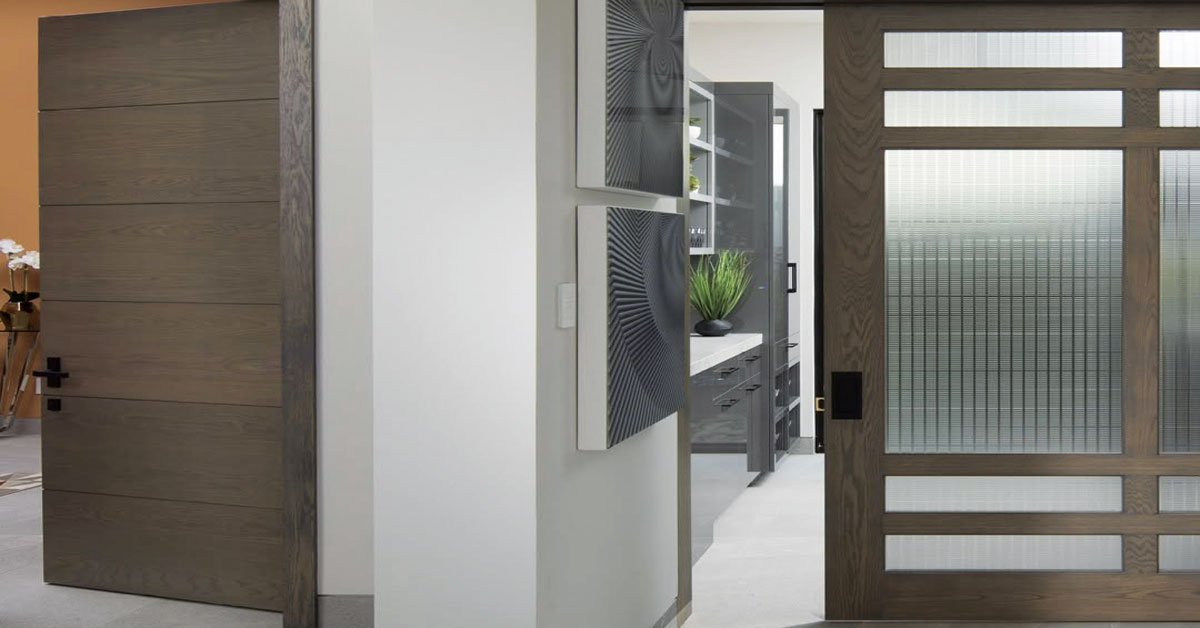
- Dining Room and Formal Living Room: French doors or glass-paneled doors are a great choice for your more formal rooms’ interior doors. These statement doors offer an open and airy appeal while also defining the space.
The Best Direction to Swing
You’ll need to determine your interior doors’ swing and the space they need. In spaces like pantries and closets, or laundry rooms, traditional swing doors tend to gobble up space. Pocket doors or sliding doors free up space, typically limited in these areas.
When determining the swing of your other interior doors, it’s necessary to make sure your doors don’t open into one another. Most Quad Cities homeowners prefer bedroom and bathroom doors that swing into the room. Your main living area and formal rooms typically have doors that swing out.
Maintaining Your Style
Selecting your interior doors should be done with intention. The usual approach is to keep the doors throughout your main living areas the same style and finish. Statement doors such as glass-paneled or French doors provide a nice variation for your formal entertaining areas. Keep your hardware (hinges, door knobs) the same throughout your main living areas.
The more private areas of your home, such as bedrooms, bathrooms, and en-suite, need some consistency as well. Match your bedroom doors, make sure your bathroom doors maintain privacy, and use your sense of style for your en-suite master bath.
Materials to Consider for Your Indoor Doors
At Seiffert Building Supplies, we have a full selection of interior doors in several different materials. Here are the most popular options:
- Solid Wood: Solid wood offers superior soundproofing and long-lasting beauty. However, this material is prone to warping in humidity so consider the room before selecting solid wood.
- Composite with Solid-Core: A solid-core composite door mimics the look and weight of solid wood, as well as the quality of soundproofing. This material holds its own against humidity.
- Hollow-Core: Hollow-core doors are lightweight and light on the budget as well. They aren’t great at sealing off sound, so use these doors in low-traffic areas and parts of your home where sound is not a concern.
- Glass-Paneled Doors: These doors are at once elegant and open and airy. Glass doors or glass-paneled doors let light flow through while separating the space.
We’re Here to Help
For more on how you can choose the right interior doors for each room in your home, please reach out to Seiffert Building Supplies.